Wildlife and water · Source directory
The wildlife source drawer
 By Dale Whitmore, Records editor · 3 min read · Published · Updated
NOAA Fisheries
Four official starting points cover most wildlife record questions: NOAA Fisheries for marine species, the Federal Register for rules and notices, USDA APHIS for Animal Welfare Act facility records, and state or local agencies for matters under their jurisdiction. No single office holds every type of record. NOAA Fisheries is a federal source for marine species science, conservation and fisheries records. Its find-a-species search tool lets you look up status, habitat, and management details for individual marine animals, from listed whales to commercial fish stocks.
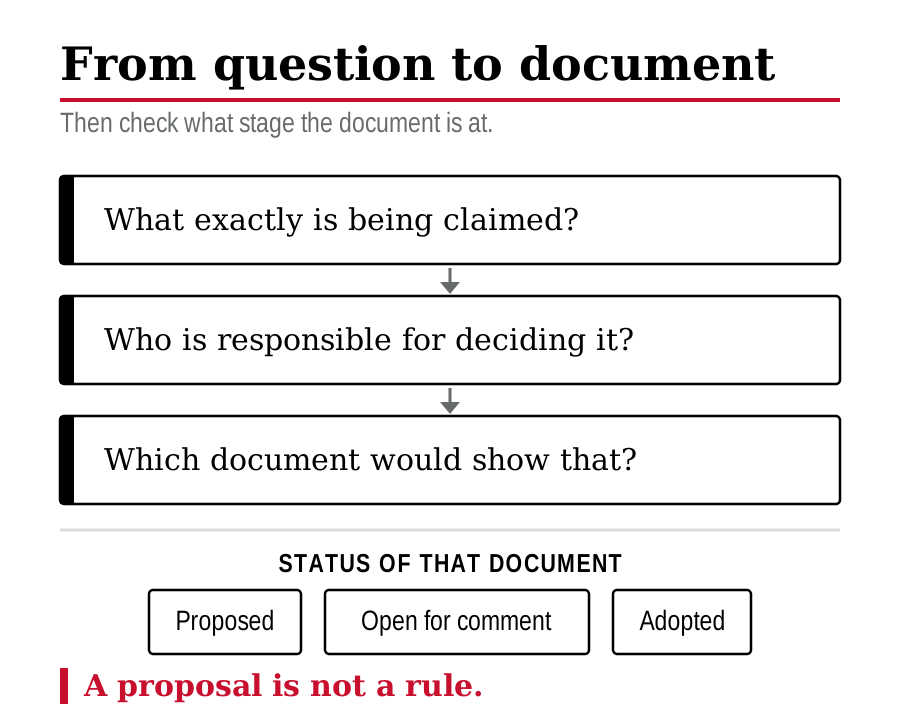
The agency’s right-whale vessel-speed action page connects the current advance notice of proposed rulemaking to earlier proposals, a withdrawal and the existing rule history. Read each document’s status before describing it as a rule or a proposal.
NOAA’s reporting page for stranded or injured marine animals directs readers to the appropriate regional reporting routes. Keep that purpose distinct from a rulemaking docket or species profile.
Beyond species lookups and stranding reports, the agency’s broader mandate covers fisheries management and marine mammal protection. The main NOAA Fisheries site describes the agency as the government’s authority on the science and management of fish, marine life, and habitats.

Federal Register
The Federal Register is the daily record of federal rules, proposed rules, and notices, and it carries agency actions at different stages. Reading it correctly matters more than skimming headlines, since a “proposed rule” carries different legal weight than a “final rule.”
The Office of the Federal Register’s Federal Register tutorial explains document types, public comments and the stages of rulemaking. Reading that primer before treating any single notice as final policy avoids misreading a draft as settled law.
Wildlife-related notices span species listings, take permits, fishery quotas, and vessel rules. Cross-checking a notice against the agency’s action page (as with the right whale vessel strike rule referenced above) helps you identify its stage. Read the document itself for comment deadlines, withdrawal history and any effective date.
USDA APHIS
USDA’s Animal and Plant Health Inspection Service (APHIS) administers the Animal Welfare Act through its Animal Care program. Its records concern regulated facilities. Do not treat that remit as a directory for every wildlife question.
For welfare enforcement records, APHIS publishes a public-facing lookup. The Animal Welfare Act public search tool lets you check license and registration status, inspection reports, and annual research-facility animal-use reports for facilities regulated under the Act.
The government’s FOIA how-to guide explains how to file a request with APHIS or any other federal agency when a document isn’t already public.
The responsible local authority
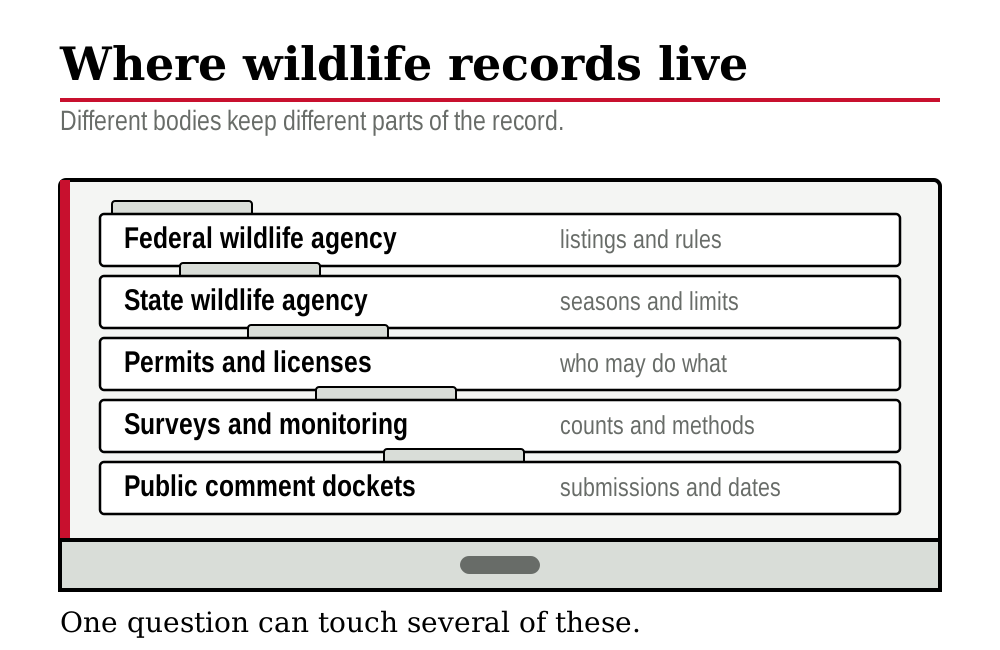
Wildlife questions can involve federal, state, territorial or local authorities. Start with the activity and place involved before deciding which office to consult. Jurisdiction determines which office has authority over the activity, permit or complaint involved.
The Association of Fish and Wildlife Agencies member list covers U.S. state agencies and several territorial agencies. Check whether the place you need appears there.
For matters that fall to city or county government rather than a state wildlife agency, USAGov’s local government directory helps identify the correct municipal or county office. Confirming jurisdiction before filing a complaint or permit request saves a records request from landing at the wrong desk entirely. Table: Marine species status or stranding report: NOAA Fisheries. Rule stage and comment dates: Federal Register. Licensed facility inspection reports: APHIS Animal Welfare Act public search. Local permits or complaints: state wildlife agency or city or county office.
